Puzzle Rush is an Android-based puzzle game inspired by the jigsaw puzzle concept, allowing users to select images from the mobile gallery or choose from built-in game images. The selected image is converted into multiple puzzle pieces for interactive gameplay. The game offers three difficulty levels—Basic, Medium, and Hard—providing increasing complexity and challenge. It features a clean and user-friendly interface with smooth touch interactions and responsive controls. The project demonstrates effective implementation of image processing and game logic in a mobile environment.
Online Bookstore is a library management application developed using Object-Oriented Programming and database concepts, providing a centralized digital platform for browsing, searching, and borrowing books. It offers structured book management with categories, availability status, and borrowing history, ensuring efficient library operations. The system includes secure user authentication and role-based access for users and administrators. It integrates a database to store user records, book details, and transaction data with proper validation to maintain data integrity. The project demonstrates practical use of software design and database management in a real-world library system.
The Simple Quiz System is designed to manage and conduct quizzes based on university semester courses, enabling teachers to create and organize quizzes aligned with official course outlines. It includes all semester-wise courses, allowing instructors to select subjects according to curriculum requirements. The system supports structured question banks for each subject and provides automated quiz evaluation to assess student understanding. It simplifies quiz administration and result management for instructors, ensuring consistency between quizzes and academic curriculum. The project highlights effective integration of academic planning with a digital assessment platform.
The Traffic Light System is an intelligent traffic control solution integrated with a camera-based monitoring system for real-time vehicle detection. It uses a countdown-driven signal control mechanism to ensure orderly and timed traffic movement. The system analyzes traffic density by counting vehicles on each road and dynamically adjusts signal timings to improve traffic flow efficiency. Appropriate data structures are used to store, update, and manage vehicle count and timing data for optimal decision-making. The project demonstrates effective integration of computer vision techniques with algorithmic logic to simulate smart city traffic management.
The Snake Game is a progressive-level game application where difficulty increases with the introduction of obstacles such as blades, fire, and other hazards. It includes dynamic food placement that changes location after a set interval, requiring strategic movement and planning. The game implements smooth and responsive controls for guiding the snake while detecting collisions with obstacles, walls, and the snake’s own body. A scoring system reflects player progress and performance across different levels. The project showcases advanced implementation of data structures, event handling, and real-time game logic to enhance user engagement.
This project implements a secure password-based access control system using a 4×4 keypad for password input and an LCD for displaying system status and messages. The system grants access by activating a servo motor and relay to unlock the door when the correct password is entered, indicated by a green LED. Wrong password attempts trigger a red LED and buzzer alert, and the system locks after multiple failed attempts for enhanced security. It supports a secure password change process and includes manual reset using a push button. The system demonstrates memory-based latch behavior and wrong-attempt protection to ensure secure authentication.
The Digital Voting Machine is a secure electronic voting system that allows users to cast votes through user-friendly input controls and displays voting status on an LCD screen. It records and stores votes using memory-based logic, ensuring that each voter can cast only one vote and receives confirmation through LED indicators. The system supports vote counting and displays results after voting completion, ensuring transparency and reliability. It includes administrative controls for reset and management of voting sessions. The project highlights secure voting, accurate vote storage, and reliable result computation.
The Character Guessing Game is a programming fundamentals project where the user guesses a character selected by the system and receives feedback on each attempt. It uses loops and conditional logic to manage game flow, track attempts, and provide real-time responses to the user. The game includes a scoring mechanism based on attempts and offers a clear success or failure message at the end. It supports restarting the game for new rounds, allowing repeated play. The project demonstrates basic programming concepts such as input handling, control structures, and logical decision-making.
The YouTube Automation System is a programming fundamentals project that automates basic YouTube tasks such as searching, playing, and pausing videos using script-based controls. It utilizes web automation logic to interact with the YouTube interface and handle user inputs efficiently. The system includes error handling and status messages to ensure smooth execution and repeatable automation. It demonstrates practical application of automation techniques for repetitive tasks and content navigation. The project highlights basic scripting skills and automation logic in a real-world web environment.
Puzzle Solver AI is an intelligent system that applies heuristic search algorithms to solve puzzles efficiently by finding the shortest path to the goal state. It evaluates minimal heuristic values at each step to determine optimal moves and reduce search complexity. The system provides step-by-step solutions showing the best sequence of actions leading to the goal. It is designed to handle various puzzle scenarios and demonstrates effective implementation of AI search strategies. The project highlights the practical use of heuristic methods for problem-solving and decision-making.
The AI-Based Mock Interview System is a platform that generates realistic interview questions based on selected job roles and difficulty levels. It provides real-time feedback, scoring, and suggestions for improvement using speech/text analysis and performance metrics. The system supports interview simulation with recording and progress tracking to help users enhance communication and confidence. It evaluates user responses and offers personalized recommendations for better performance. The project demonstrates practical application of AI techniques for skill development and career preparation.
A line following robot is an autonomous machine that uses sensors to detect and follow a predefined path, typically a black or white line on a contrasting surface. These robots rely on infrared sensors, PID controllers, and motor drivers to ensure smooth and accurate navigation. The competition highlighted the students’ creativity, technical prowess and was a great opportunity for students to apply their technical skills in a real-world challenge.


Smart Plate Reader (SPR) is a critical technology widely used in domains such as traffic management, toll collection, Parking System, and crime prevention. This project implements a Python based Smart Plate Reader (SPR) system using open CV for image preprocessing and Tesseract OCR for text recognition.

LAWAD AI-Based Law Advisor AI is an advance search platform designed to streamline access to Pakistan’s income tax and customs Laws. Powered by cutting age BERT(Bidirectional Encoder Representations form Transformers technology, LAWADAI delivers precise and Context-Aware result for legal queries, enabling users to efficiently navigate complex legal databases.

A dual-axis solar tracker is a smart system designed to maximize solar energy capture by automatically adjusting the position of the solar panel throughout the day. Controlled by an Arduino Uno, the tracker uses Light Dependent Resistors (LDRs) to detect the sun’s position and adjust the panel’s orientation along both horizontal and vertical axes. This dynamic tracking system ensures the panel remains directly aligned with the sunlight for optimal efficiency. Compared to fixed systems, dual-axis solar trackers can increase energy production by 25–35%, making them a highly effective solution for improving solar power output.

This project presents an automated, user-friendly system for self-assessment of eye vision, designed to measure visual acuity without the need for a professional examiner. The solution enables individuals to perform a basic eye test within a short period using a digital interface, which can be operated via a screen, mobile device, or dedicated kiosk.
The system displays optotypes (such as Snellen or Tumbling E charts) and records the user’s responses to assess visual sharpness. It may include features like voice guidance, adaptive difficulty levels, and result interpretation. The test results can be stored, printed, or sent electronically for further consultation if needed.
This solution is especially beneficial in rural or remote areas, where access to eye care professionals is limited, or in high-demand urban clinics to streamline preliminary screening.

The role of Artificial Intelligence (AI) in autonomous vehicles (AVs), focusing on current methods used for perception, decision-making, and control. It highlights key AI technologies such as machine learning, computer vision, and sensor fusion.
The review also discusses major challenges, including safety, real-time data processing, ethical concerns, and regulatory issues. Finally, it outlines future directions, emphasizing the need for more robust, interpretable, and reliable AI systems to enable safer and smarter autonomous driving.

Flappy Bird is a game where the player controls a bird by tapping the screen to make it flap. The objective is to fly between a series of gaps in a pair of vertical pipes without hitting the pipes or the ground. The game ends when the bird collides with an obstacle or the ground. Scoring is based on the number of pipes successfully passed.
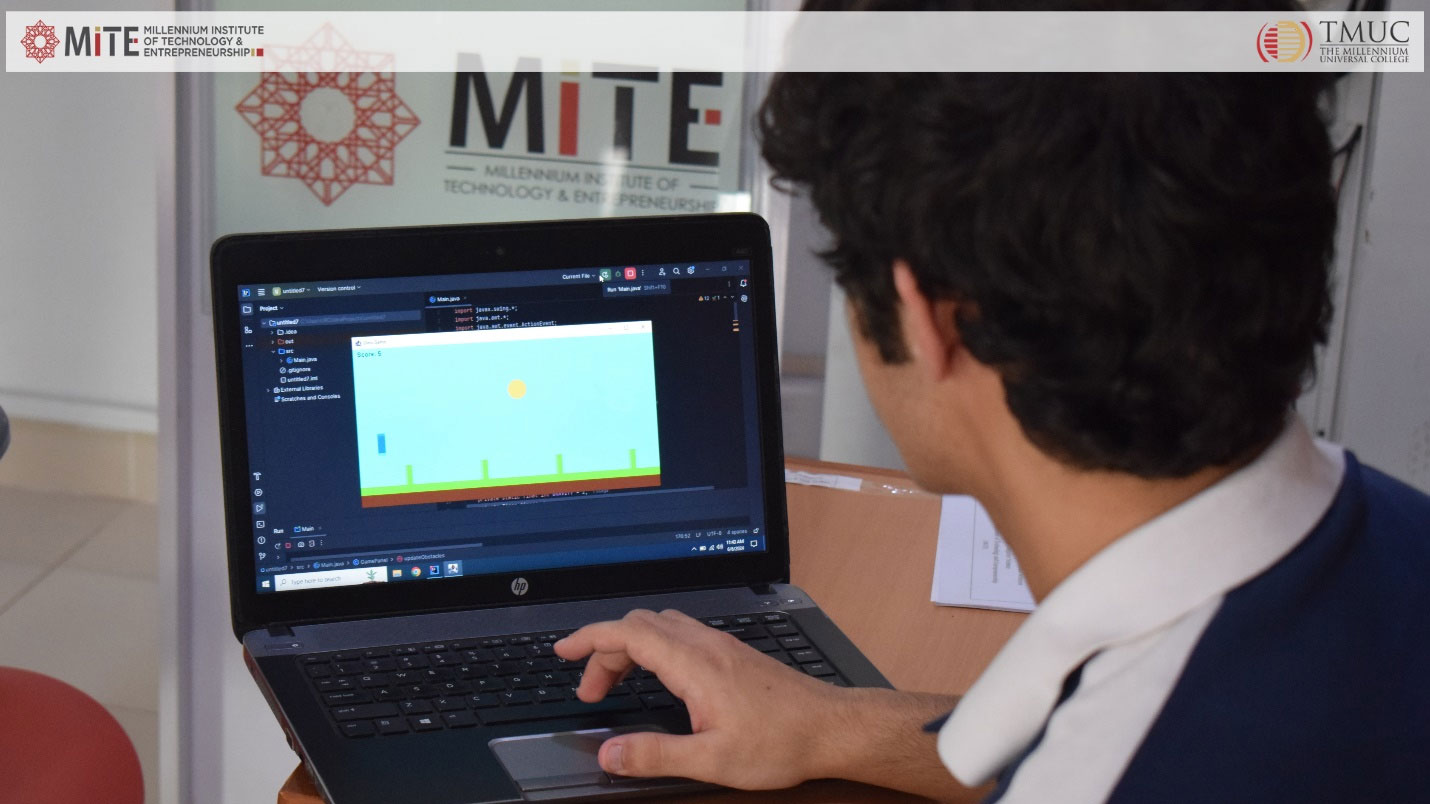
Snake game where the player controls a snake that grows in length for each time it eats.
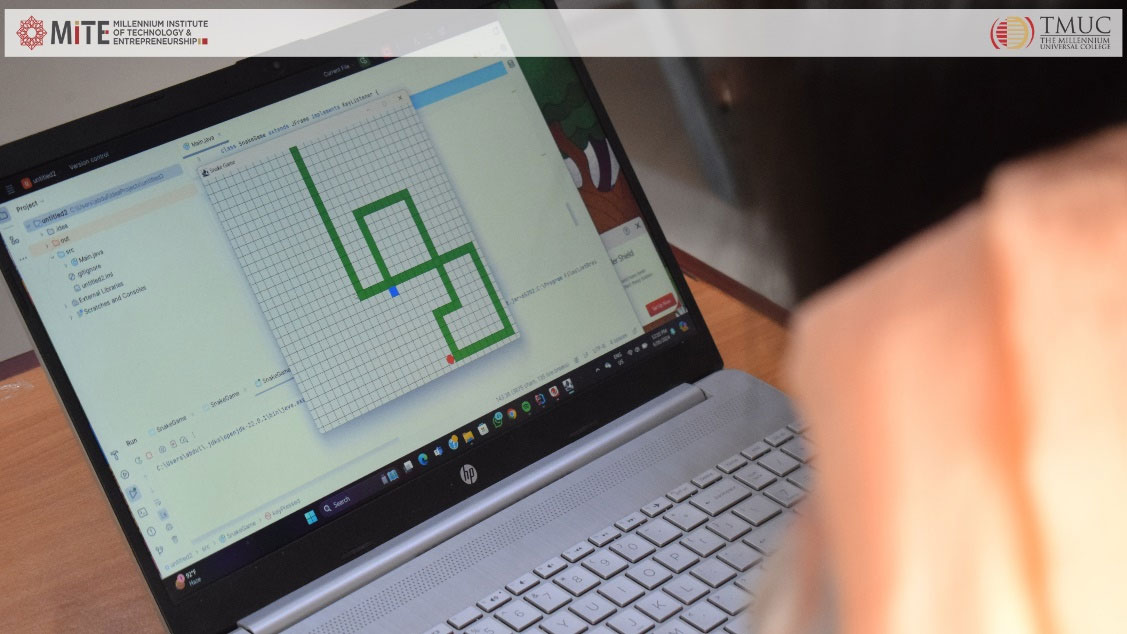
An FPS game is a video game where players experience the action through the eyes of the character, using weapons to fight enemies and complete objectives.
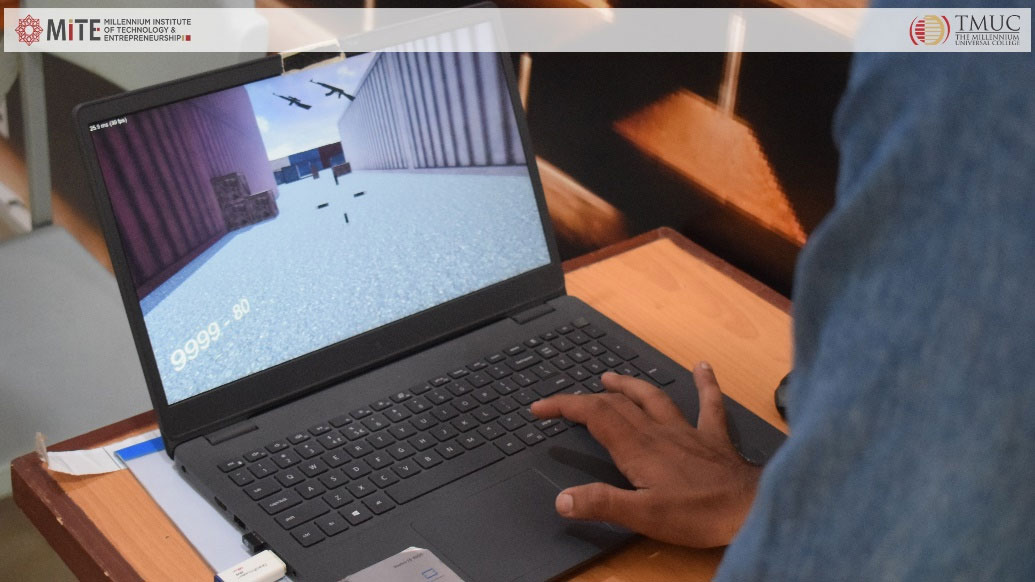
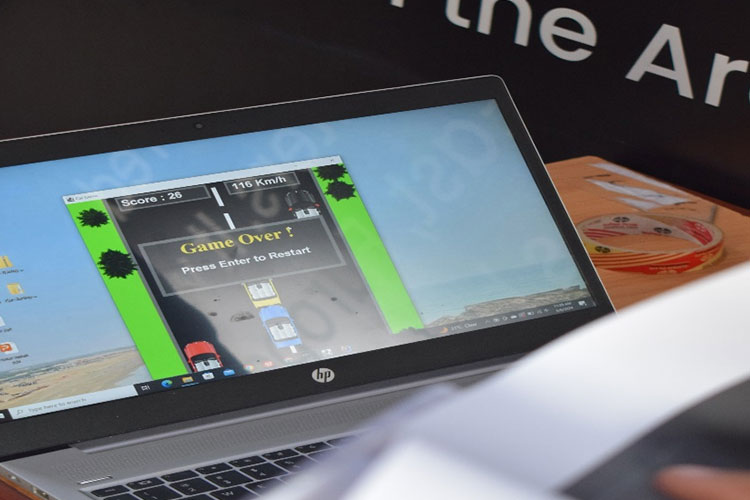
Game where players control a vehicle on a virtual race track, competing against opponents to reach the finish line first. Players must navigate turns, avoid obstacles, and strategically accelerate and brake to win.
Student submitted a Pacman Game in C language. It is a basic console program or a little clip game created for amusement purposes. It is similar to the snake game in that Pacman must be directed in such a manner that he advances down a predetermined blue route before it is deleted or devoured by Pacman. The more you clear the way, the more points you get; the game is simple to play. This project’s source code and output screens are shared here.

Students develop a basic Tic-Tac-Toe game in Python. The Tic Tac Toe game has 9 available spaces in which two players, one with a cross and the other with a circle, can place their marks at any place with the target to have 3 marks(cross or circle), in a straight line, vertically, horizontally or diagonally.

A restaurant chatbot, that acts as a human waiter. Takes orders, remembers customers, entertains them, calculates total amount and time for orders, and remembers customer’s preferences.
Graphical User Interface Implementation is a project that aims to create a user-friendly calculator application using Java. With a sleek and intuitive graphical interface, users can perform basic arithmetic operations such as addition, subtraction, multiplication, and division effortlessly. The calculator provides a seamless experience, enhancing user productivity and efficiency.
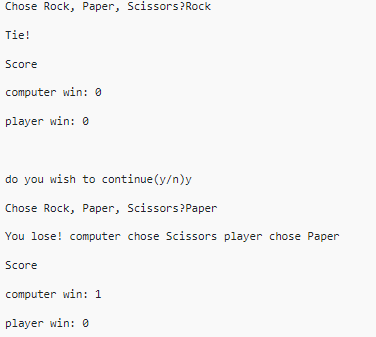
It is one of the most common games played by everyone once in his childhood, where two persons use their hands and choose random objects between rock, paper, or scissors, and their choice decides the winner between them. What if a single person can play this game? With a computer, just by using a single C application, we can design the game Rock Paper Scissor application using basic C knowledge like if-else statements, random value generation, and input-output of values. Created application has a feature where we can play the game, and maintain the score of Person 1 and Person 2.
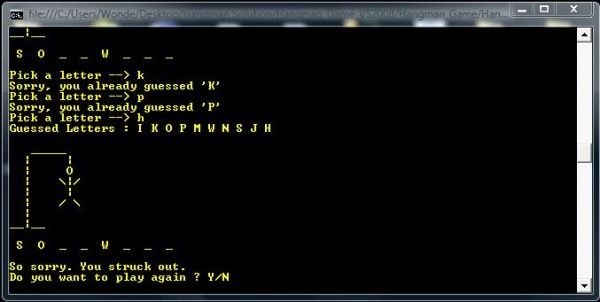
A word-guessing game where players attempt to uncover a hidden word by suggesting letters. Incorrect guesses gradually build a stick figure, leading to “hanging” if the word isn’t solved before completion.